
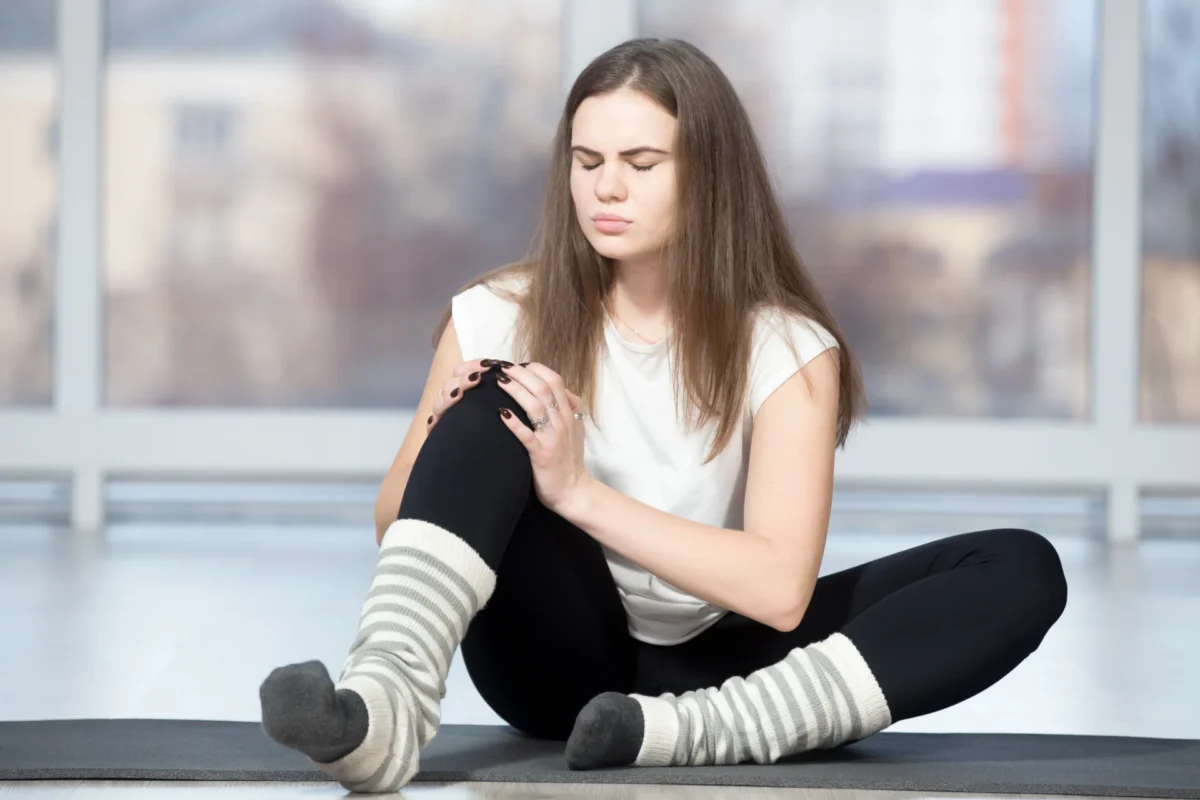
Knee pain is not limited to older adults. Many young people experience knee discomfort during exercise, after long periods of sitting, while climbing stairs, or even without an obvious injury.
The causes of knee pain in young adults can range from temporary overuse and muscle weakness to sports injuries, inflammation, and underlying joint conditions.
Understanding why your knee hurts is crucial because the right treatment depends on the underlying cause. While mild pain may improve with rest and activity changes, constant, recurrent, or severe pain should not be ignored.
Understanding Knee Pain in Young Adults
The knee is a complex, weight-bearing joint that experiences significant stress from sports, repetitive training, prolonged sitting, and sudden bursts of physical activity.
In young adults, these factors can contribute to overuse injuries, muscle imbalances, and other knee conditions that are different from the age-related arthritis commonly seen in older adults.
The good news is that most causes of knee pain in young adults are treatable, especially when diagnosed early. Constant or recurring pain should not be ignored, as timely evaluation can help prevent the problem from becoming more complicated.
Is Knee Pain in Young Adults Normal or a Sign of Something Serious?
Some knee discomfort after intense exercise is a normal physiological response. But knee pain that persists beyond a few days, recurs regularly, limits activity, or is accompanied by swelling, locking, or giving way is never simply something to push through.
Normal vs concerning knee pain in young adults:
| Normal After Exercise | See a Doctor |
| Mild aching 24-48 hours after a new activity | Swelling that develops within hours of an incident |
| Mild soreness that fully resolves with rest | Pain that wakes you from sleep |
| Stiffness after sitting that resolves within minutes | A knee that locks, clicks loudly, or gives way |
| Temporary increase in discomfort after increasing training load | Pain that has persisted for more than 4-6 weeks |
7 Common Causes of Knee Pain in Young Adults
Cause 1 — Patellofemoral Pain Syndrome (Runner’s Knee)
Patellofemoral pain syndrome (PFPS) is the most common cause of knee pain in young adults — occurring when the kneecap does not track smoothly in its groove, creating friction and irritation on the cartilage underneath. It is an overuse condition driven by VMO weakness and tight lateral structures pulling the patella out of alignment.
Characteristic symptoms:
- Dull aching pain around or behind the kneecap
- Worse on stairs, squatting, running, and prolonged sitting (the “movie sign”)
- Grinding or clicking under the kneecap
- Typically no visible swelling
Most common in: Runners, cyclists, students who sit for long periods, and young women due to a wider hip-to-knee angle increasing lateral patellar pull.
Cause 2 — Anterior Cruciate Ligament (ACL) Injury
ACL injuries are among the most common acute sports injuries in young adults — typically caused by cutting, pivoting, jumping, or sudden deceleration in sports like football, basketball, and badminton. When the ACL tears partially or completely, it produces immediate severe pain, rapid swelling, and significant knee instability.
Characteristic symptoms:
- A loud “pop” at the moment of injury
- Immediate swelling within 2-6 hours
- Knee gives way with turning or cutting movements
- Inability to continue sport on the day of injury
Most common in: Athletes aged 15-30 in pivoting sports; women have a 2-3 times higher ACL injury rate due to anatomical and neuromuscular differences.
Cause 3 — Meniscus Tear
The menisci are C-shaped fibrocartilage pads that cushion and stabilise the knee. In young adults, tears most commonly result from a sudden twisting movement on a weight-bearing knee — a mechanism clearly identified by the patient, unlike the gradual degenerative tears seen in older adults.
Characteristic symptoms:
- Pain on the inner or outer knee depending on which meniscus is torn
- Swelling developing 24-48 hours after injury
- Catching, locking, or clicking sensation within the knee
- Difficulty fully straightening or bending the knee
Most common in: Sportspeople aged 15-35 and those who perform deep squatting regularly.
Cause 4 — Patellar Tendinopathy (Jumper’s Knee)
Patellar tendinopathy affects the tendon connecting the kneecap to the tibia — caused by repetitive loading that exceeds the tendon’s recovery capacity. It is most prevalent in sports requiring repeated jumping, explosive leg drive, and rapid deceleration.
Characteristic symptoms:
- Localised pain just below the kneecap or along the patellar tendon
- Worst at the start of activity, may ease mid-session, then returns afterwards
- Progressively worsens with continued high-load training without adequate rest
- Tenderness directly on the tendon
Most common in: Volleyball and basketball players, runners, and young adults who have recently increased training load significantly.
Cause 5 — Iliotibial Band (IT Band) Syndrome
The iliotibial band runs from the hip to the outer knee. During repetitive running and cycling, it repeatedly rubs against the lateral femoral condyle — producing progressive outer knee pain that worsens predictably with continued activity.
Characteristic symptoms:
- Sharp or burning pain on the outer side of the knee
- Begins after a predictable distance or duration of running — not immediately
- Worsened by downhill running or stair descent
- No swelling — purely a movement-provoked pain
Most common in: Distance runners, cyclists, and young adults who have increased training volume too rapidly.
Cause 6 — Osgood-Schlatter Disease
Osgood-Schlatter disease is a traction injury at the growth plate where the patellar tendon attaches to the tibia — particularly common during adolescent growth spurts when bone growth temporarily outpaces soft tissue lengthening.
Characteristic symptoms:
- Pain and visible swelling at the tibial tuberosity — the bony bump just below the kneecap
- Worsened by running, jumping, kneeling, and sport
- Tender to direct pressure over the bump
- Typically resolves when growth is complete, though the bony prominence may remain
Most common in: Active adolescents aged 10-15 during growth spurts, in both boys and girls.
Cause 7 — Plica Syndrome
Plica syndrome involves inflammation of a remnant fold of synovial membrane within the knee joint that becomes thickened and painful through repetitive movement. It is frequently misdiagnosed because it closely mimics PFPS and meniscus pathology.
Characteristic symptoms:
- Snapping, clicking, or popping at the front-inner side of the knee
- Pain with stairs, prolonged sitting, squatting, and kneeling
- A palpable band-like structure on the inner knee
- Often only confirmed on MRI or arthroscopy
Most common in: Young adults with sedentary desk jobs who exercise irregularly, and recreational runners.
How Do You Stop Knee Pain at a Young Age?
The approach depends significantly on the specific cause — but these strategies are broadly effective across most causes of knee pain in young adults:
Rest and Activity Modification
Complete rest is rarely necessary or helpful — but modifying the provocative activities is important. This means temporarily reducing or replacing the activities that trigger pain (e.g., switching from running to swimming for IT band syndrome) rather than stopping all movement.
Strengthen the Right Muscles
Quad weakness, VMO weakness, gluteal weakness, and hip abductor weakness all increase knee load in different ways. Targeted strengthening — identified through proper physiotherapy assessment — is the most evidence-based treatment for PFPS, patellar tendinopathy, and IT band syndrome.
Physiotherapy
A physiotherapist with sports or musculoskeletal experience can identify the specific biomechanical factors driving your knee pain — and create a programme that addresses the root cause, not just the symptoms.
Ice and Anti-Inflammatory Management
- Ice for 15-20 minutes after provocative activity reduces post-activity inflammation
- NSAIDs for short-term pain management in acute phases
- Avoid prolonged NSAID use without medical supervision
Footwear and Orthotics
Overpronation — excessive inward rolling of the foot during activity — is a significant biomechanical contributor to PFPS, IT band syndrome, and patellar tendinopathy. Proper supportive footwear and, where indicated, custom orthotics significantly reduce knee load.
Treatment Options for Knee Pain in Young Adults
Conservative (first-line) treatment:
- Physiotherapy — targeted exercise, manual therapy, and biomechanical correction
- Load management — reducing provocative activities while maintaining fitness
- NSAIDs and analgesics for acute pain
- Taping (McConnell patellar taping for PFPS) and bracing
- Corticosteroid or PRP (platelet-rich plasma) injections for tendinopathy in selected cases
Surgical treatment (when conservative management fails):
- ACL reconstruction — gold standard for complete ACL tears in young athletes
- Arthroscopic meniscus repair or partial meniscectomy
- Arthroscopic plica resection for confirmed symptomatic plica syndrome
- Patellar realignment procedures for severe structural malalignment unresponsive to physiotherapy
Preventing Knee Pain in Young Adults
Prevention is significantly more straightforward than treatment for most of these conditions:
- Progressive training load increase — never increase running mileage or training intensity by more than 10% per week
- Warm-up and cool-down consistently — dynamic warm-up before sport, static stretching after
- Strengthen hip and gluteal muscles — these control knee alignment during loading and are the most overlooked preventive factor
- Maintain a healthy body weight — every extra kilogram adds 3-4 times the force through the knee during running
- Wear appropriate footwear — sport-specific shoes and, where needed, orthotics
- Listen to early warning signals — mild knee discomfort that starts during a run is the body asking you to stop; ignoring it consistently converts minor overuse into significant structural injury
When to See a Doctor for Knee Pain
Seek specialist assessment if:
- Knee pain has not improved after 4-6 weeks of appropriate self-management
- You experienced a sudden injury with swelling, a pop, or giving way — ACL and meniscus injuries require prompt imaging
- The knee locks, catches, or gives way consistently
- Pain is severe enough to limit sport, work, or daily activity
- Swelling is visible without a clear triggering injury
Seek same-day assessment if:
- Significant swelling and inability to weight-bear following an acute injury
- Obvious deformity after a traumatic incident
Frequently Asked Questions
1. How do I stop knee pain in young adults?
Identify the underlying cause, temporarily modify activities that worsen pain, and strengthen the quads and glutes through appropriate physiotherapy. Addressing factors such as movement patterns and training load can also help.
2. Why am I having knee pain in my 20s?
Common causes include overuse conditions such as patellofemoral pain syndrome, patellar tendinopathy, and IT band syndrome, as well as sports injuries like ACL or meniscus tears. Arthritis is less common but should not be assumed away without assessment.
3. What vitamin helps reduce knee pain?
Vitamin D is most commonly linked to musculoskeletal health, while vitamin C supports collagen production. Supplements should be taken only when needed and preferably under medical guidance.
4. Is walking good for knee pain in young adults?
Usually, yes. Comfortable walking can help maintain joint movement and muscle function. However, after an acute injury with significant swelling, medical assessment should come before returning to normal activity.
5. What are the best exercises for knee pain in young adults?
Common options include quad sets, straight leg raises, clamshells, hip abduction, and hamstring exercises. The right programme depends on the cause of knee pain and should ideally be guided by a physiotherapist.
6. Which vitamin deficiency causes knee pain?
Vitamin D deficiency is most consistently associated with musculoskeletal pain and poor bone health. Vitamin C deficiency can also affect collagen production. Blood tests can help identify deficiencies.
7. Can sleeping position cause knee pain in young adults?
Yes. Poor sleeping positions may place extra stress on the knee or surrounding tissues. A pillow between the knees for side sleepers can help improve alignment and reduce pressure.
Conclusion
Knee pain in young adults is not something to dismiss or simply manage around — it is a signal that a specific problem is developing that will respond far better to early treatment than delayed intervention. Whether the cause is PFPS from a muscle imbalance, an ACL tear from sport, or patellar tendinopathy from overtraining, the right diagnosis makes the treatment pathway clear and the recovery timeline predictable.
ICI Hospital — Best Multi-Speciality Hospital in South Delhi — provides expert knee pain assessment for young adults, with experienced orthopaedic specialists, advanced imaging, and access to both conservative rehabilitation and surgical options under one roof.