
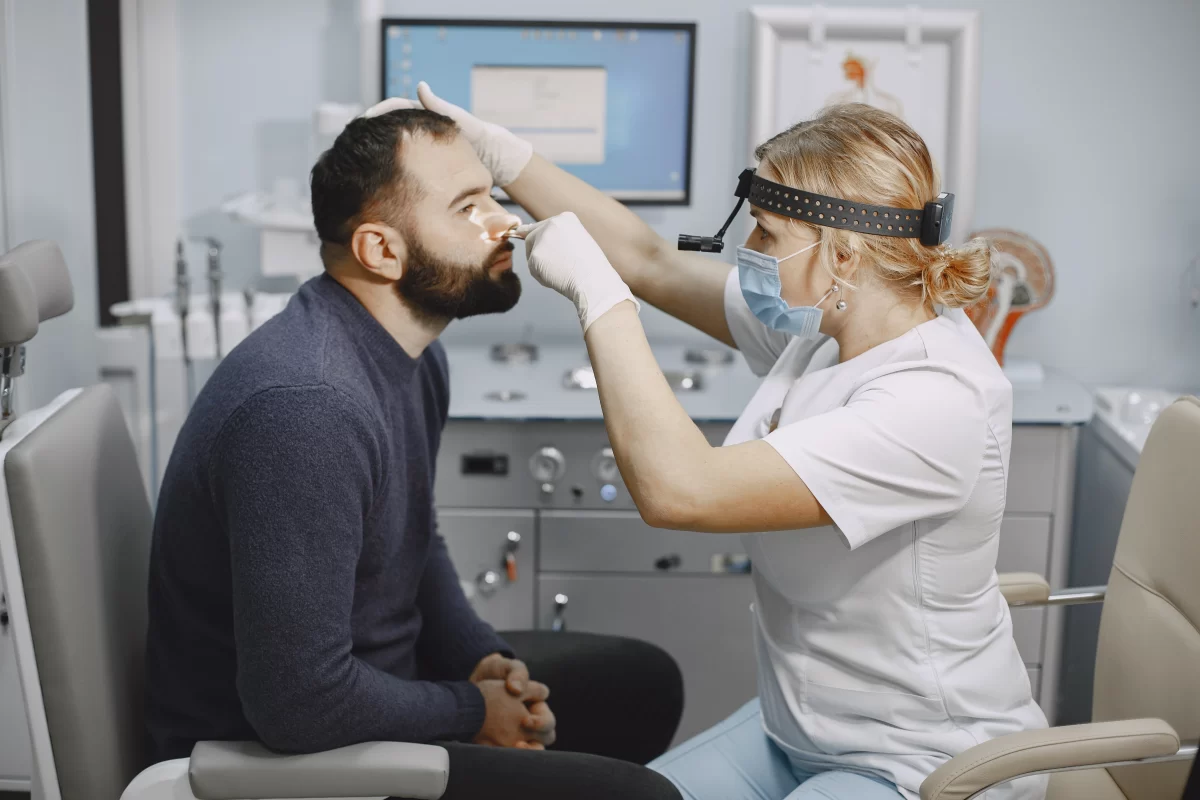
ENT endoscopy is a diagnostic examination that allows an ENT specialist to view areas of the ear, nose, throat, nasal passages, sinuses, and voice box using a small camera attached to an endoscope. Depending on the symptoms and area being examined, different types of endoscopic examinations may be used.
For patients with constant nasal blockage, sinus symptoms, throat discomfort, voice changes, swallowing problems, or other unexplained ENT symptoms, an endoscopic examination can provide a clearer view of structures that may be difficult to assess during a routine examination.
In this complete guide, we’ll cover what ENT endoscopy is, why it’s recommended, how it’s performed, its benefits and risks, and what to expect.
What Is ENT Endoscopy?
ENT endoscopy — also called nasoendoscopy, laryngoscopy, or sinoscopy depending on the area examined — is a procedure in which a small camera on a thin flexible or rigid scope is inserted through the natural openings of the ear, nose, or throat to provide a direct, high-definition view of the internal structures of the ear, nose, and throat.
The scope transmits a live image to a monitor, allowing the ENT specialist to examine the nasal passages, nasal polyps, sinuses, the nasopharynx (back of the nose), the larynx (voice box), vocal cords, epiglottis, and the middle ear — in real time, with far greater clarity and detail than any external examination permits.
ENT endoscopy can be purely diagnostic — used to identify the cause of symptoms — or therapeutic, where the scope is used to perform surgical procedures such as removing polyps, draining sinuses, or taking biopsies during the same visit.
Why Do Doctors Recommend an ENT Endoscopy?
ENT specialists recommend endoscopy when symptoms suggest a problem that cannot be adequately assessed from external examination alone. The most common clinical reasons for recommending ENT endoscopy include:
- Constantt nasal blockage not responding to medication — to identify structural causes, polyps, or tumours
- Chronic sinusitis or recurrent sinus infections — to directly assess the sinus drainage pathways
- Unexplained nosebleeds — to identify the bleeding source within the nasal passages
- Voice changes, hoarseness, or voice loss — to examine the vocal cords and larynx directly
- Difficulty swallowing (dysphagia) — to assess the throat and hypopharynx
- Suspicion of adenoid enlargement — particularly in children with chronic nasal obstruction or recurrent ear infections
- Chronic throat symptoms — Constant sore throat, post-nasal drip, or throat clearing
- Suspected foreign body in the nose or throat
- Pre-surgical planning for functional endoscopic sinus surgery (FESS) or other ENT procedures
Procedure of ENT Endoscopy — What Happens
ENT endoscopy is typically performed as an outpatient procedure — no hospital admission is required for diagnostic cases.
Before the Procedure
- A decongestant nasal spray is applied to reduce swelling of the nasal passages and improve access
- A local anaesthetic spray (lignocaine or co-phenylcaine) is applied to numb the nasal mucosa — reducing discomfort during scope insertion
- The specialist explains the procedure and answers any questions before proceeding
- No fasting is required for routine diagnostic nasal or laryngeal endoscopy — fasting is required only if sedation or general anaesthesia is planned
During the Procedure
- The patient sits comfortably in a semi-reclined chair or on the examination couch
- For nasal endoscopy: the flexible or rigid endoscope is gently passed through one nostril, advancing through the nasal cavity, examining the middle meatus, posterior nasal space, nasopharynx, and larynx in sequence
- For laryngoscopy: the scope passes to the level of the vocal cords — the patient may be asked to say “eee” or breathe in specific patterns to assess vocal cord movement
- The entire nasal and laryngeal examination typically takes 5-10 minutes
- Images and video are captured on the monitor for documentation and patient review
- If a biopsy is needed, a small tissue sample is taken through the working channel of the scope — causing minimal additional discomfort
After the Procedure
- Most patients are ready to leave within 15-30 minutes of the procedure
- The local anaesthetic numbness typically resolves within 30-60 minutes
- Patients are advised not to eat or drink until the throat numbness fully resolves — to prevent aspiration
- Findings are discussed immediately after the procedure in most cases
Uses of ENT Endoscopy — What Can It Show?
ENT endoscopy provides diagnostic information that no other non-invasive examination can deliver with the same precision:
In the nasal cavity and sinuses:
- Nasal polyps — size, location, and extent
- Deviated nasal septum — degree and impact on nasal airflow
- Enlarged inferior turbinates
- Sinus ostia (drainage openings) — whether blocked or patent
- Nasal tumours or granulomatous disease
In the nasopharynx and adenoids:
- Adenoid hypertrophy — particularly relevant in paediatric patients
- Nasopharyngeal masses or tumours
- Eustachian tube orifice — relevant in patients with recurrent ear infections or glue ear
In the larynx and vocal cords:
- Vocal cord nodules, polyps, or cysts — common in voice professionals
- Vocal cord paralysis or reduced mobility
- Laryngeal tumours — early detection is critical for treatment outcomes
- Epiglottitis and supraglottic pathology
- Subglottic lesions
5 Major Benefits of ENT Endoscopy
Benefit 1 — Direct, High-Definition Visualisation
ENT endoscopy provides a live, magnified, high-definition view of structures that are completely inaccessible to external examination — enabling the ENT specialist to see exactly what is causing symptoms rather than inferring from secondary signs.
Benefit 2 — Immediate Diagnosis in a Single Visit
For most conditions, ENT endoscopy provides a definitive diagnosis during the same consultation — eliminating weeks of empirical treatment and multiple follow-up visits that characterise management without direct visualisation.
Benefit 3 — Minimally Invasive With No Surgical Incisions
Diagnostic ENT endoscopy requires no incisions, no general anaesthesia in most cases, and no hospital admission — making it significantly less burdensome than any other method of directly examining the nose, sinuses, or larynx.
Benefit 4 — Combined Diagnosis and Treatment in One Procedure
Many ENT endoscopy procedures combine diagnosis with immediate treatment — a nasal polyp can be biopsied, a bleeding vessel can be cauterised, or a minor sinus obstruction can be cleared during the same endoscopic session.
Benefit 5 — Safe for All Age Groups Including Children
ENT endoscopy is routinely performed in children — particularly for adenoid assessment, foreign body removal, and recurrent ear and sinus conditions — with appropriate local anaesthesia and, where needed, brief sedation or general anaesthesia for young children.
ENT Endoscopy Surgery — When the Scope Becomes Operative
When endoscopic findings confirm a condition requiring surgical correction, ENT endoscopy transitions to operative endoscopy — performed under general anaesthesia in an operating theatre:
Functional Endoscopic Sinus Surgery (FESS): The most common ENT endoscopic surgical procedure — using the endoscope to open blocked sinus drainage pathways, remove polyps, and restore normal sinus ventilation in patients with chronic sinusitis.
Endoscopic Adenoidectomy: Removal of enlarged adenoids under direct endoscopic vision — more precise than blind curettage and associated with lower recurrence rates.
Endoscopic Vocal Cord Surgery: Microlaryngoscopy under general anaesthesia with the endoscope providing magnified visualisation for removal of vocal cord nodules, polyps, or early laryngeal lesions.
Endoscopic Foreign Body Removal: Urgent endoscopic removal of foreign bodies in the nasal passages, pharynx, or larynx — particularly important in children.
Risks in ENT Endoscopy
Diagnostic ENT endoscopy is extremely safe — but informed consent includes awareness of the following:
Diagnostic endoscopy risks:
- Mild discomfort or sneezing during scope insertion — most patients find the procedure uncomfortable rather than painful
- Minor mucosal bleeding — particularly in patients on anticoagulant medication
- Transient vasovagal response — rarely, patients feel faint during or immediately after the procedure
- Allergic reaction to local anaesthetic spray — very rare
Operative ENT endoscopy risks :
- Orbital complications — rare but significant risk in sinus surgery due to orbital wall proximity
- Cerebrospinal fluid leak — very rare complication from superior sinus surgery near the skull base
- Post-operative bleeding
- Infection
- Anaesthetic risks applicable to any general anaesthetic procedure
When Should You Consider ENT Endoscopy Urgently?
Most ENT symptoms do not require an urgent or immediate endoscopy. However, certain symptoms need prompt medical assessment because they may indicate airway problems, significant bleeding, or another condition requiring timely evaluation.
Urgent indications:
- Sudden voice loss or significant voice change lasting more than 2-3 weeks
- A lump in the neck alongside throat symptoms — possible head and neck malignancy
- Progressive difficulty swallowing that is worsening over weeks
- A child with suspected foreign body in the nose or throat
- Severe nosebleed not controllable with first aid measures
- Stridor — a high-pitched breathing sound suggesting upper airway obstruction
What to Expect Before, During and After ENT Endoscopy
Before: Arrive at the clinic without having applied nasal sprays immediately beforehand — unless specifically instructed. Inform the ENT specialist of all medications, particularly blood thinners. No fasting required for routine diagnostic endoscopy.
During: Expect mild pressure and a sensation of the scope moving through the nasal passage. Breathing through the mouth reduces discomfort. The procedure is brief — typically 5-15 minutes for a complete diagnostic examination.
After: Resume daily activities immediately in most cases. Avoid blowing the nose forcefully for several hours. If a biopsy was taken, mild bleeding for 24-48 hours is normal. Avoid eating and drinking for 30-60 minutes if throat numbness is present.
Frequently Asked Questions
1. Is an ENT endoscopy painful?
Most patients feel mild pressure, tickling, or an urge to sneeze rather than significant pain. A local anaesthetic spray may improve comfort. Operative ENT endoscopy is generally performed under anaesthesia.
2. What is endoscopy in ENT?
ENT endoscopy uses a thin flexible or rigid scope with a camera to examine areas such as the nose, sinuses, throat, larynx, and vocal cords. It helps doctors identify abnormalities and plan appropriate treatment.
3. Is ENT endoscopy 100% safe?
No medical procedure is completely risk-free. Diagnostic ENT endoscopy is generally safe, but temporary discomfort, minor bleeding, or dizziness can occur. Surgical endoscopy has additional risks related to the procedure and anaesthesia.
4. How many days rest are needed after ENT endoscopy?
Routine diagnostic ENT endoscopy usually requires no bed rest, and most patients can resume dailyl activities the same day. Recovery after surgical endoscopy depends on the type and extent of surgery.
5. How much does ENT endoscopy cost in India?
The cost varies by procedure, hospital, location, doctor’s fees, and whether additional treatment is required. Contact the hospital for the current cost of your specific ENT endoscopy.
Conclusion
ENT endoscopy has transformed the diagnosis and treatment of ear, nose, and throat conditions — replacing weeks of uncertain empirical management with precise, immediate, and often same-visit answers. Whether diagnosing the cause of chronic sinusitis, assessing unexplained hoarseness, or guiding surgical treatment of nasal polyps, endoscopy gives ENT specialists the diagnostic clarity that translates directly into better patient outcomes.
ICI Hospital — trusted multi-speciality hospital in South Delhi — provides comprehensive ENT endoscopy for both diagnostic and surgical indications, with experienced ENT specialists, modern endoscopic equipment, and a patient-centred approach to every ENT condition.